Download the free printable
Download PDF (2 pages) Download PNG preview
US Letter, 8.5 x 11 inches. Print at 100% for craft pieces; use Fit to page if your printer clips the margins. An adult should help with scissors and fitting wearable crafts.
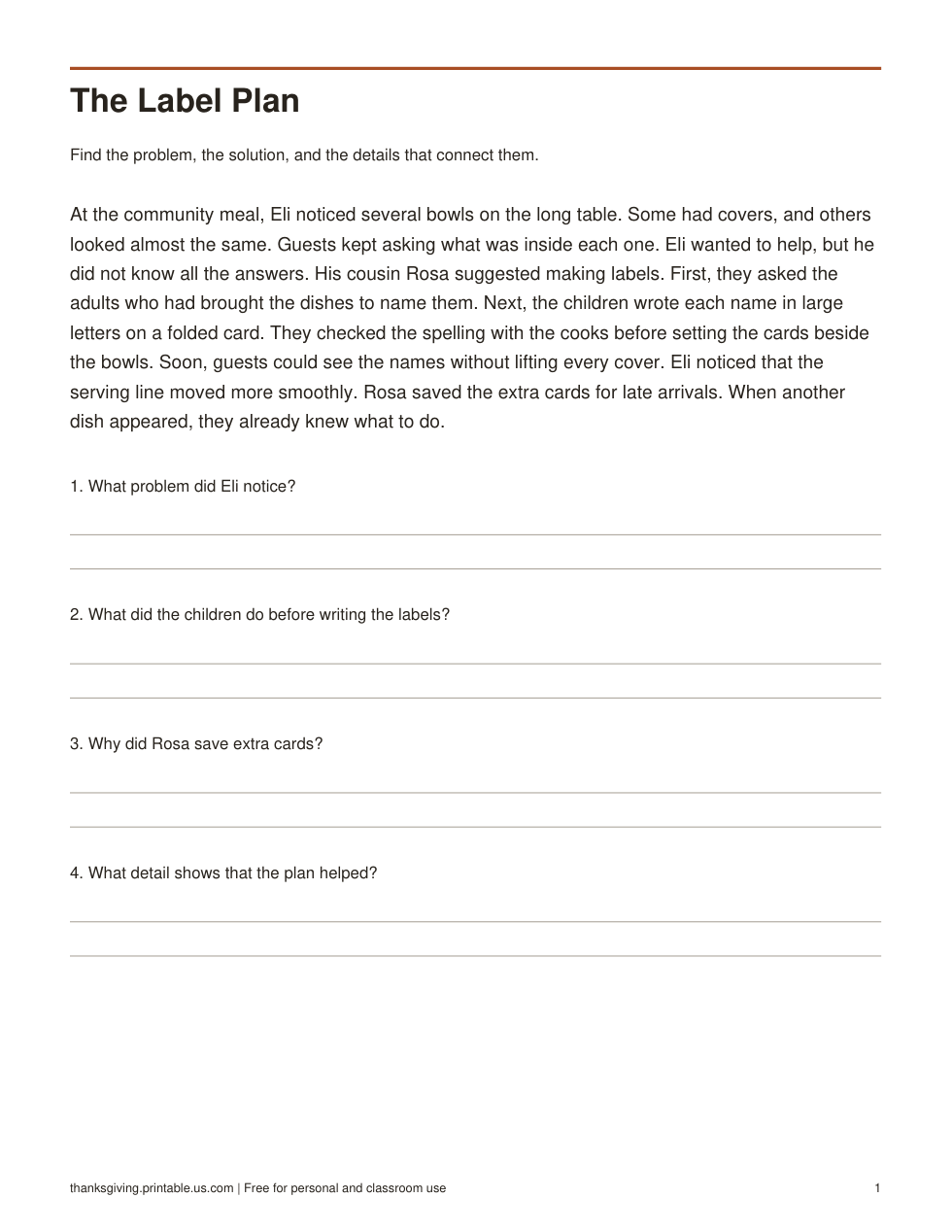
Third graders can practice reading for details with a Thanksgiving story that has a clear problem and a practical solution. This original passage follows two children organizing a food table. The questions ask students to identify the problem, sequence the actions, and infer why clear labels help the guests.
What to make
The passage is contemporary fiction. It offers a familiar setting without requiring every student to celebrate the same holiday or eat the same foods. Encourage readers to return to the text instead of answering only from their own experience. The answer page models accurate responses, while leaving room for a child to explain the same idea in different words.
How to use this printable
- Read the passage once for the overall story, then ask students to state the main problem in one sentence.
- Read again and underline the actions that help solve the problem, keeping them in the order they happen.
- Answer the questions using complete thoughts, and include a detail from the passage when an explanation is requested.
- Discuss the answers with a partner and revise any response that is not supported by what the story actually says.
Make the activity your own
For a writing extension, have students design a clear label for a classroom supply shelf and explain how it would help someone. For additional reading support, divide the passage into shorter sections and pause after each one to check understanding. Confident readers can suggest another possible solution to the story’s problem, then explain whether that solution would meet the same need.
Questions before you begin
Is the passage a real event?
No. It is an original fictional story written for comprehension practice.
How much should a third grader write?
A short, clear answer is enough when it addresses the question. Explanation questions may need an extra sentence with supporting evidence.