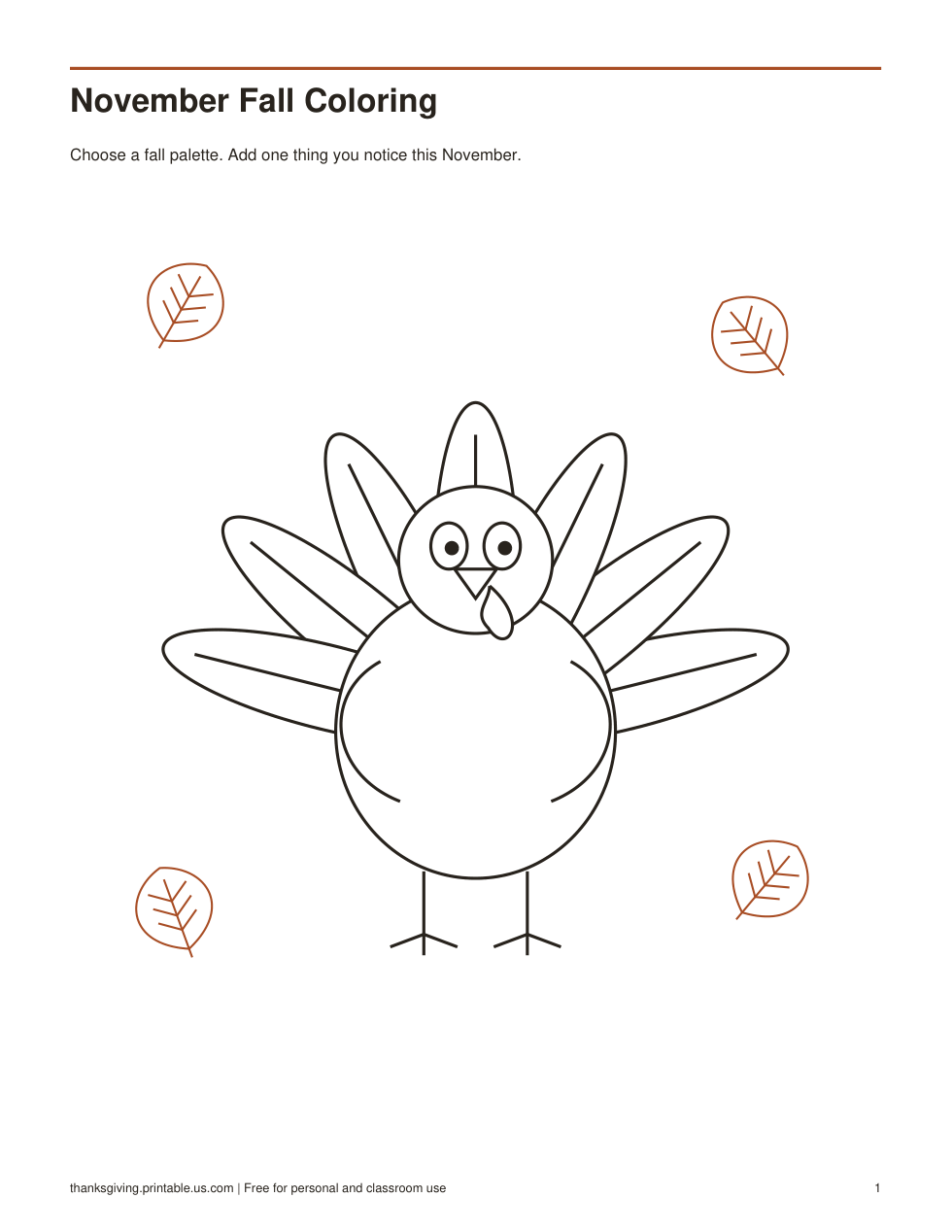
Download the free printable
Download PDF (1 page) Download PNG preview
US Letter, 8.5 x 11 inches. Print at 100% for craft pieces; use Fit to page if your printer clips the margins. An adult should help with scissors and fitting wearable crafts.
Mark the change of season with a November coloring activity built around fall leaves and simple autumn shapes. A seasonal page can be used throughout the month, including by families and classrooms that do not celebrate Thanksgiving. Children can explore warm colors, leaf patterns and a short observation sentence without needing a detailed craft setup.
How to use this printable
- Look outside or at a local photograph and name the colors you notice. Remember that November looks different in different places.
- Choose three main colors and one accent. Color a few large shapes first, then decide where the accent will be most useful.
- Add lines, dots or repeated marks inside a leaf to create texture. Keep at least one leaf plain so the two approaches can be compared.
- Write a November observation below or on the back: what changed, what stayed the same or what you expect to notice next.
Make the activity your own
For a class display, pair the artwork with local weather or nature observations. Students in warm climates can describe their own surroundings instead of pretending every place has falling leaves or snow. A family can use the page as a quiet afternoon activity and collect one dated version each year. Try a second copy with an unusual palette to compare how color changes the feeling of the same outline.
Printing and questions
Print the PDF on US Letter paper in portrait orientation. Start with one copy and check the preview before making a classroom set. Use ordinary paper for a worksheet, or cardstock when the finished piece needs to stand up to handling.
Is this only a Thanksgiving coloring page?
No. The focus is November and fall imagery, so it can be used independently of a holiday lesson.
Can I use leaves collected outside as a reference?
Yes. Observe them on a table and compare shapes and veins, then return to your own drawing choices.