Download the free printable
Download PDF (2 pages) Download PNG preview
US Letter, 8.5 x 11 inches. Print at 100% for craft pieces; use Fit to page if your printer clips the margins. An adult should help with scissors and fitting wearable crafts.
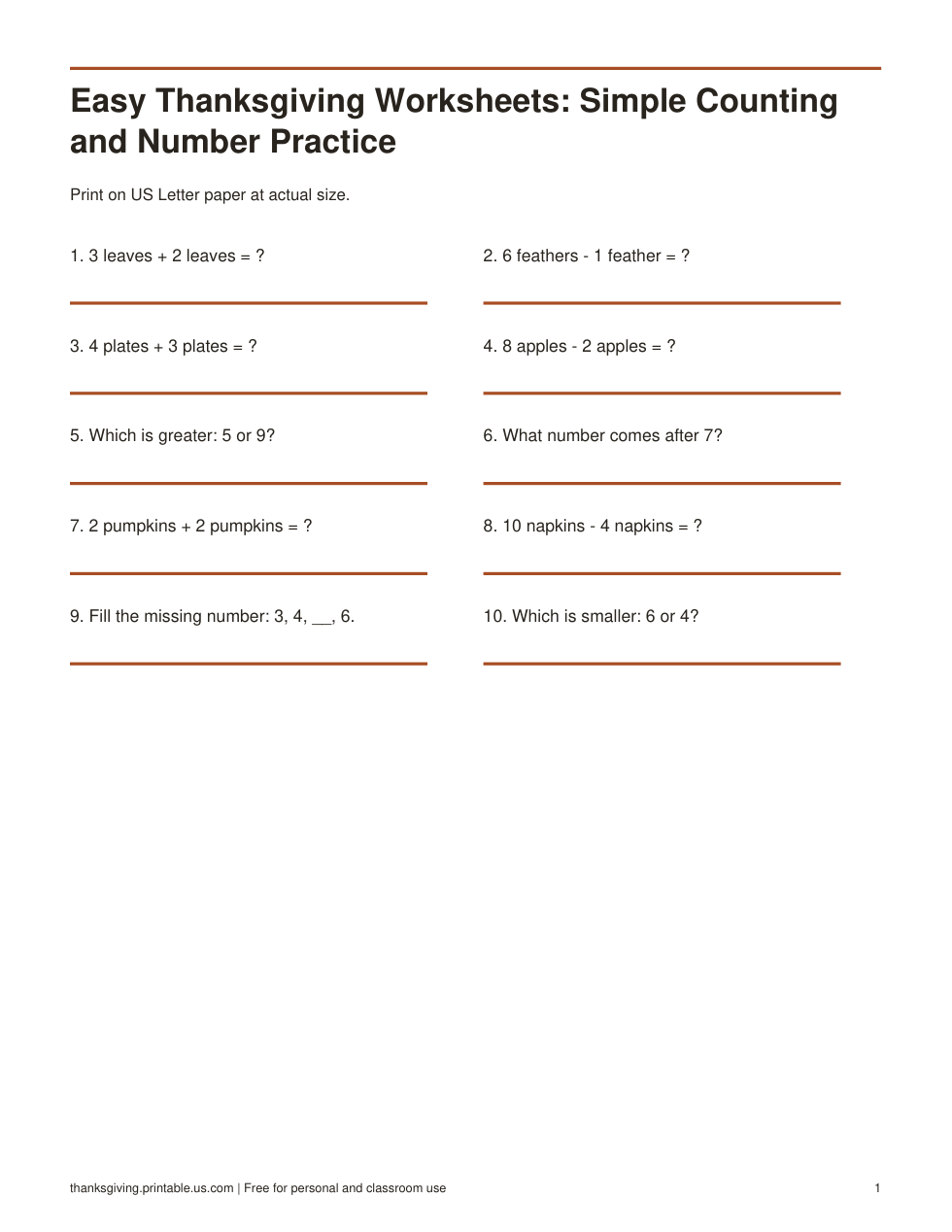
Easy Thanksgiving worksheets should give beginning learners a clear task they can understand and complete with appropriate support. This math page uses small numbers, straightforward directions, and familiar objects such as leaves and paper feathers. Use counters or drawings alongside the problems so children can connect a written equation with an action they can see.
Begin with one problem together
Read the first prompt aloud and model the situation with small objects. If there are three leaves and two more arrive, place three counters down, add two, and count the total. Point to the matching numbers in the equation. Ask the child to explain what changed before writing the answer. This keeps the symbols connected to the story rather than treating the page as a guessing exercise.
Let children choose a solving tool
Some learners prefer drawing, while others move counters or use a number line. Offer more than one method and ask which feels clearest. For subtraction, physically move objects away or cross out drawn pictures. For comparisons, line up two groups so the extra objects are visible. Keep the page uncrowded by solving only a few problems at a time when the child needs a shorter session.
Finish with a problem the child creates
Invite the learner to draw a small group of turkey feathers and invent an addition or subtraction story. An adult can write the equation the child describes. Then trade roles: let the child check the adult’s answer using the drawing. This reversal provides a useful way to hear the child’s reasoning and discover whether the operation matches the story.
Frequently asked questions
What age is the worksheet for?
Use the numbers and skills as your guide rather than a strict age label. It suits learners working with small whole-number quantities and basic operations, with support as needed.
Must children complete every problem at once?
No. Choose a few that match the current lesson and stop while the child can still explain the method. A short, thoughtful session can show more understanding than rushing through a full sheet.