Download the free printable
Download PDF (1 page) Download PNG preview
US Letter, 8.5 x 11 inches. Print at 100% for craft pieces; use Fit to page if your printer clips the margins. An adult should help with scissors and fitting wearable crafts.
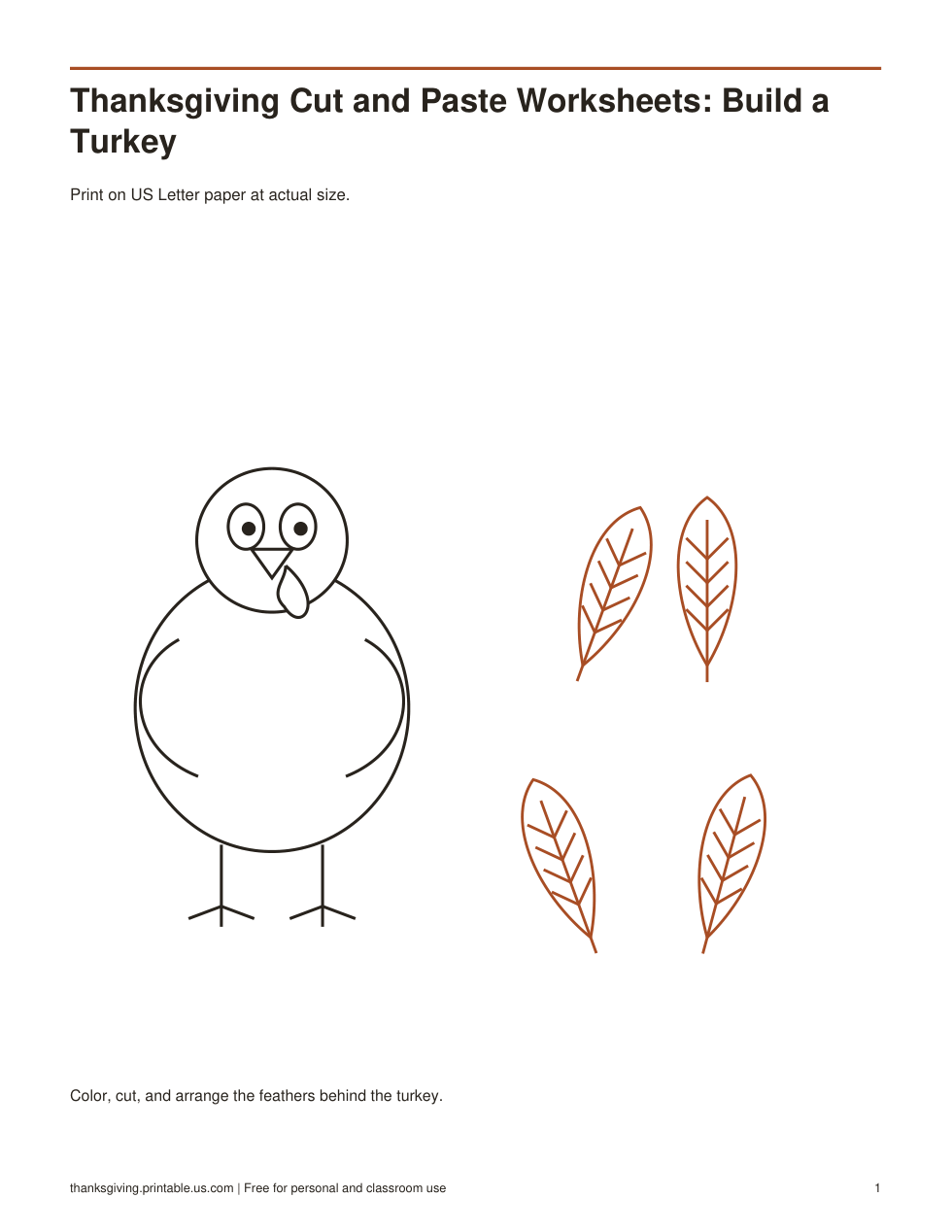
A Thanksgiving cut-and-paste worksheet combines a small construction task with opportunities to name shapes, compare sizes, and explain a plan. This original turkey activity uses separate pieces that children arrange before gluing. The finished page can be displayed as a craft or used as a starting point for a short sentence about the student’s choices.
Name and prepare the pieces
Look over the sheet together before cutting. Identify the body, head, feathers, and any smaller details. Color the parts while the paper is still whole, then write a name on the backing page. Children can cut broad outside curves while an adult helps with tight corners. Place the separated pieces in a tray or on a second sheet so nothing disappears under the table.
Arrange before attaching
Lay the feathers in a fan and place the body over their lower ends. Move the pieces until the turkey looks balanced. Ask which pieces need to go behind others and which should remain in front. Glue the back layer first, then the body and face details. This order gives children a concrete reason to think about sequence instead of attaching everything as soon as it is cut.
Add an early-learning challenge
Count the feathers and compare two color groups. Create a repeating pattern or write one letter of a name on each feather. A child who is ready to write can finish the sentence, “I made my turkey with…” and name two materials or design choices. Younger learners can dictate the sentence and point to the parts while an adult writes.
Frequently asked questions
What if my child is still learning to cut?
Prepare the smaller pieces in advance and leave a few broad shapes for practice. The child can still make the placement decisions, apply glue, and describe the finished turkey.
Do the pieces need to match the example exactly?
No. A different feather order, unusual color scheme, or funny face can still show successful planning. Ask the child to explain the choices rather than correcting every variation.