Download the free printable
Download PDF (1 page) Download PNG preview
US Letter, 8.5 x 11 inches. Print at 100% for craft pieces; use Fit to page if your printer clips the margins. An adult should help with scissors and fitting wearable crafts.
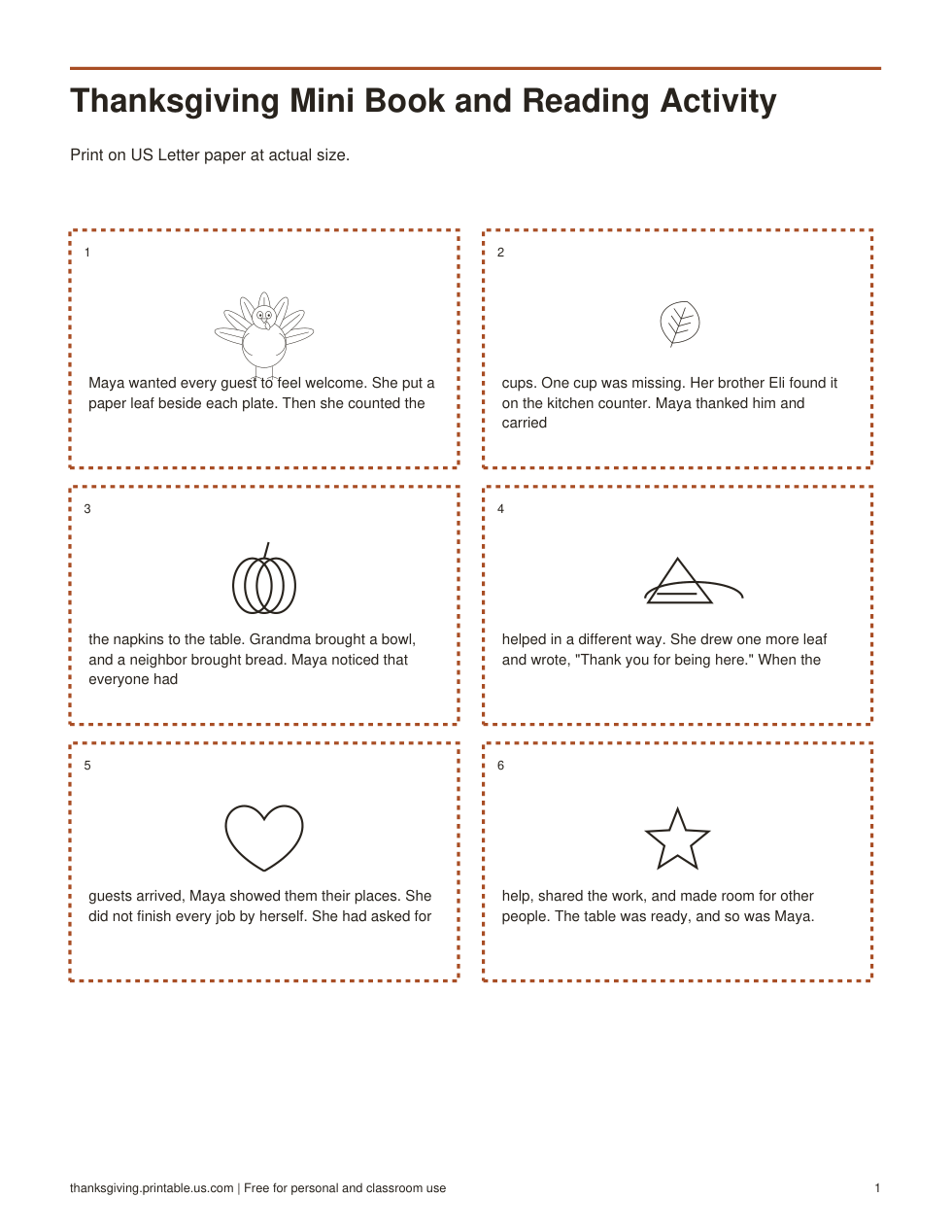
A Thanksgiving mini book gives beginning readers a short text they can revisit with confidence. This original story follows a child preparing a welcoming table and noticing small ways people help. Use the reading page on its own, or copy the story onto folded sheets to create a small booklet with room for a child’s illustrations.
Read the story before making the booklet
Read the passage aloud once while the child follows the words. On a second reading, pause at familiar words and invite the child to join in. Ask who the story is about and what the character wants to accomplish. Point out that the events move from preparing a space to welcoming other people. Students can retell that sequence using their own words before any folding begins.
Divide the story into short scenes
Fold two sheets of paper in half to make a simple booklet. Give each scene its own space: setting the table, finding a missing item, receiving help, and sharing a welcome. Copy one or two sentences beneath each drawing. An adult can write dictated text for a younger child. Keep illustrations connected to the words so readers can use the pictures to support understanding.
Add one personal page
Finish the booklet with a new page about a helpful action the child can take. The student might draw carrying napkins, making a place card, or inviting someone to sit nearby. Read the finished booklet to a partner and ask which picture helped explain the story best. Repeated readings give the child a chance to notice punctuation, recognize familiar words, and speak with greater expression.
Frequently asked questions
Is this a reproduction of a published mini book?
No. The passage and questions were written for this activity. They are not pages from a commercial classroom book or an answer key to another publisher’s resource.
Can children who are not reading independently use it?
Yes. Read together, let the child retell the events, and accept dictated captions. Drawing a scene and explaining it aloud are useful ways to show understanding.